How will you spend St. Patrick’s Day? For many of us who trace our roots to Ireland, March 17 (or the weekend before) has traditionally been a night of partying.
My fondest memories of the holiday are from college. The family of a roommate owned the restaurant that threw the best St. Patrick's Day party in the state of Indiana. The day was devoted to indulging ourselves in meat grinders, cursing or praising the results of the NCAA Tournament, and consuming as much green beer as we could handle.
It was great fun, although the next morning was none too pretty. But was it in the spirit of what the holiday intends to convey?
Who was the real St. Patrick?
Most people can quickly tell you he was the saint responsible for bringing Christianity to the Emerald Isle—but even this great truth has been shrouded in stories about his driving serpents out of the country, or using the shamrock to teach about the Holy Trinity. The life of Patrick was considerably different.
The real Patrick was actually named Succat, and he grew up in Wales, as the son of a magistrate. He enjoyed an easy life until Celtic warriors swept up from the sea and captured their villa. Succat was one of many who were sold into slavery. He was shipped to a chieftan in Ireland, where a cruel master beat him, cursed him and fed him with the animals. But it was here that he found what his former luxury had denied him—the true God.
Through prayer he came to pledge his life to the Almighty. One night, he dozed upon the hillside and a voice told him he would soon go to his own country. Soon the same voice directed
him to leave—“Behold, your ship is ready.”
Evangelizing the Emerald Isle

Succat would return to his homeland, but in the period of his slavery he had come to a great love of the Irish people. He followed the call of the Lord to the Emerald Isle and began the long
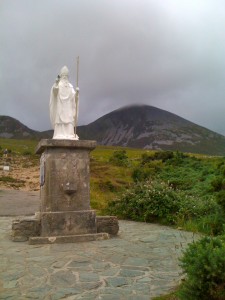
work of evangelizing the country. He confronted an organized pagan culture, and converted it to the Gospel. His entourage included not only fellow clerics, but cooks, tradesmen and other artisans. Today one of the great symbols of his impact is “Croagh Patrick,” a mountain in County Mayo.
Succat spent his Lents at the top of this mountain. Today, pilgrims make the climb to a little chapel that awaits them at the top. I had the chance to make this climb—it's a small microcosm of what the spiritual journey can seem like—it’s rocky, the footing is difficult, and it seems like the climb will never end.
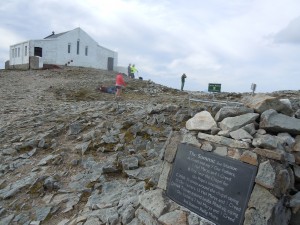
Then, all of a sudden, the chapel in sight and the end arrives. In ways more profound then this climb, Succat—by this time known as the missionary Patrick—made it to the end, and through his work he transformed the world.
St. Patrick Transformed the World
Lest one think this last statement is overly grandiose, consider the impact Ireland has had on human history. During the Dark Ages it was the Irish monks who preserved Western culture, as documented in the book How The Irish Saved Civilization. The Irish people would soon fan out across the world, particularly to the United States. The country’s rich faith heritage did not prevent her from suffering greatly, and the Potato Famine sent thousands upon thousands of emigrants fleeing to the shores of Boston and New York.
The Irish landed in America bedraggled and poor, but they had their faith. And they made their mark on American culture.
I was privileged to visit St. Patrick’s Cathedral in New York, a magnificent edifice built by the pennies of Irish immigrants, and a monument to their fortitude. Irish Catholics built great
universities—Notre Dame is the centerpiece, and their priests were influential in developing scores of other colleges.
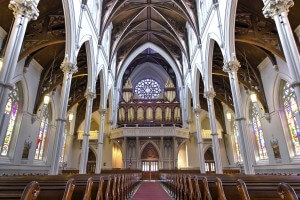
Closer to home, my grandmother landed in Boston more than 80 years ago, before moving westward. I visited that great city, and as I sat in beautiful Holy Cross Cathedral gazing upon the stained glass windows, I wondered if grandma had ever set foot in here. Today, scores of Irish descendants in this country can contemplate the same thing.
What Would Ireland Be Like Without St. Patrick?
What if Succat had not responded to God’s call to go to Ireland 15 centuries ago? The monuments we would be visiting would have been built to the Celtics—and I don’t mean the pro basketball franchise that resides in Boston. I mean the organized pagan culture the missionary Patrick had to convert.
The Celts were a warlike people and it was common practice to display the head of their victims as trophies. If you’re of Irish heritage and are glad we don’t live that way anymore, St. Patrick’s Day should have special significance for you.
Reducing St. Patrick’s Day to a night of merriment and drinking is simply a one-day embodiment of a deeper challenge facing the American Irish of today. Our ancestors faced material hardship, but we face something more dangerous—the loss of our collective Catholic soul through indifference to the faith that Patrick bequeathed to us. As sure as Patrick once did, we face a highly organized pagan culture of death—and too many of the most prominent American Irish are indifferent to the troubles around us. This is the end fruit of a culture that has accepted the recreational parts of the Irish heritage, but left the faith behind. A secularized St. Patrick's Day is a logical reflection of this.
How to celebrate St. Patrick's Day
It’s not that the way we celebrate the day is wrong—the Irish have always been renowned for their ability to have a good time. Indeed, one of the great contributions the immigrants made to the culture of Boston was bringing a light-hearted pious sense to a Protestant religious community that was all too stern and serious. But the Irish of those days did not separate fun from fidelity.
So if you celebrate St. Patrick’s Day the way I once did back in Indiana, let’s do just a few things a little different. If you’re enjoying a green beer, why not touch the crucifix or religious medal around your neck and give a quick toast to the man that made it possible?
If you’re in a bar watching Villanova, Gonzaga or any of the other Catholic colleges that will be playing in the NCAA Tournament, keep in mind how many faithful Irish priests made those institutions what they are. And give thanks to the Irish saint that got the ball rolling.
Above all, consider whether you’re the one God is calling to help bring the American Irish back to their roots in Christ at the dawn of the 21st century. Why not you? Stranger things have
happened—after all, the fate of the Irish world once rested on the shoulders of a 16-year old slave from Wales.